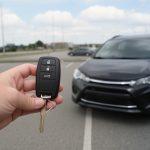
You’ve checked the tyres, topped up the screenwash, filled the tank or charged the battery, and packed everything you need. But there’s one small item that’s easy to overlook before a long drive: your spare car key.
A spare key provides valuable backup if your main key is lost, damaged, or becomes unreliable while you’re away from home. However, if the spare uses a battery-powered remote or smart-key function and hasn’t been tested for months, you don’t want to discover a problem when you’re hundreds of miles away.
A quick pre-journey check could save considerable inconvenience. If you discover either key isn’t functioning correctly, a professional Car locksmith Bournemouth can assess the problem and advise whether the key requires a new battery, professional attention, programming, repair, or replacement.
📑 Table of Contents
📍 Why Take a Spare Key on a Long Journey?
📍 Why Spare Key Batteries Get Forgotten
📍 Signs Your Key Battery May Be Weak
📍 How to Test Your Spare Key
📍 Where Should You Keep the Spare?
📍 What If a New Battery Doesn’t Fix It?
📍 Your Pre-Journey Key Checklist
📍 When to Contact Demob Locksmiths
🚗 Why Take a Spare Key on a Long Journey?
When you’re close to home, dealing with a misplaced or damaged key can be inconvenient. When you’re far away, potentially with accommodation bookings, children, luggage, or a tight schedule, that inconvenience can become significantly more disruptive.
Taking a working spare gives you another option if something happens to your everyday key.
A spare can be particularly useful if your main key is:
🔎 Lost during the trip
💥 Accidentally damaged
💧 Exposed to water
🔋 Affected by a remote battery problem
🔘 Suffering from worn or unreliable buttons
🔑 Accidentally locked somewhere inaccessible
The important word, however, is working. Simply having a spare isn’t enough if you haven’t tested it.
🔋 Why Do Spare Key Batteries Get Forgotten?
Your everyday key gives you plenty of warning when something starts changing.
You might notice its remote range becoming shorter or find yourself pressing the unlock button twice instead of once.
Your spare key is different.
It could spend months—or even longer—stored securely in a drawer without being used. Because you’re not interacting with it regularly, you may have no idea whether its remote functions still operate as expected.
That’s why testing the spare before travelling is worthwhile.
⚠️ Signs Your Key Fob Battery May Be Weak
Symptoms vary depending on the key and vehicle, but possible warning signs include:
📉 Reduced range — You need to stand closer to the vehicle before the remote responds.
🔘 Inconsistent buttons — Locking or unlocking works only after several attempts.
⏱️ Delayed response — The vehicle doesn’t respond as promptly as expected.
🔄 Intermittent operation — The remote works sometimes but not consistently.
🚨 Vehicle warning — Some vehicles may provide a low-key-battery warning.
These symptoms don’t always prove that the battery is responsible. If the problem remains after installing the correct fresh battery, further diagnosis may be required.
📊 Spare Key Pre-Journey Check
LONG JOURNEY PLANNED │ ▼🔑 Find your spare key │ ▼🔍 Inspect for damage │ ▼🔘 Test remote functions │ ▼🚗 Test the key with the vehicle │ ┌────┴────┐ ▼ ▼ Works Problem found │ │ ▼ ▼🎒 Store🔋 Check battery
safely │ ▼ Still faulty? │ ▼🛠️ Seek professional assessment🧪 How to Test Your Spare Key Before Travelling
Ideally, don’t wait until the morning of your journey.
Give yourself enough time to resolve any problems you discover.
🔍 Inspect the Key
Look for cracks, loose casing sections, damaged buttons, or a bent or heavily worn blade where applicable.
🔘 Test the Remote
Check whether the lock and unlock functions respond normally from an appropriate distance.
🚗 Test It With the Vehicle
Don’t assume that working remote buttons mean every necessary key function is fine. Test the spare according to the normal operating procedure for your vehicle.
🔋 Check the Battery if Necessary
If remote performance appears weak, confirm the correct battery specification before replacing it. Follow the manufacturer’s instructions where available.
🔄 Test Again
After changing a battery, check the key again rather than immediately assuming the problem has been resolved.
💡 Don’t Automatically Replace a Battery Just Because It’s Old
Preventative checks are sensible, but unnecessary tinkering isn’t.
If the spare key is operating correctly and the manufacturer doesn’t specify a particular battery replacement interval, there may be no reason to dismantle the key simply because you haven’t used it recently.
Instead:
🔍 Inspect it.
🔘 Test it.
🚗 Confirm it works correctly.
📖 Follow manufacturer guidance where applicable.
If performance appears weak or the vehicle displays an appropriate warning, replacing the correct battery may then be sensible.
🔑 Where Should You Keep Your Spare While Travelling?
Taking both keys is useful only if they’re stored sensibly.
Don’t keep your main and spare keys together.
If they’re both in the same handbag, backpack, or jacket and that item disappears, you’ve lost both keys at once.
A better approach is to keep them securely separated.
👤 If travelling with another trusted adult, you might each securely carry one key.
🏨 At your destination, use an appropriate secure location for the spare.
🚫 Avoid leaving the spare somewhere obvious or easily accessible to strangers.
🔐 Treat smart and proximity keys according to the vehicle manufacturer’s security recommendations.
The objective is to make sure losing one key doesn’t also mean losing your backup.
📉 Main and Spare Key Travel Strategy
POOR PREPARATION BETTER PREPARATION🔑 Spare never tested✅ Spare tested before departure
👜 Both keys kept together🔐 Keys stored separately
🔋 Battery issue ignored⚡ Warning signs investigated
❓ Key condition unknown🔍 Key inspected beforehand
🚨 Problem found on holiday🛠️ Problem addressed before travel
🧠 Remember: The Battery Isn’t Responsible for Every Fault
It’s tempting to blame every remote-key problem on a coin-cell battery, but modern car keys can be more complicated.
If a new, correctly fitted battery doesn’t restore normal operation, other possibilities may need investigating.
These can include:
🔘 Worn or damaged buttons
💥 Internal damage caused by an impact
💧 Previous moisture exposure
📡 Electronic faults
🧱 Damage to the key casing
🚘 A problem that isn’t actually caused by the key
A professional assessment can help distinguish between these possibilities.
🧳 Your Pre-Journey Car Key Checklist
Car keys deserve a small place on your usual road-trip checklist.
🔑 Main Key
✅ Working reliably
✅ No obvious physical damage
✅ Remote responding normally
🔐 Spare Key
✅ Located before departure
✅ Physically inspected
✅ Tested with the vehicle
✅ Remote functions checked where applicable
🎒 Travel Preparation
✅ Main and spare stored separately
✅ Keys protected from moisture and damage
✅ Any existing faults investigated before leaving
A check that takes only a few minutes could prevent a much bigger headache later.
🚨 What If Your Spare Key Doesn’t Work?
Finding out before your journey is far better than discovering the problem at a motorway service station or holiday destination.
Start with straightforward checks.
🔋 If appropriate, check the remote battery.
🔍 Inspect the key for visible damage.
📖 Review relevant vehicle guidance.
🔑 Compare its behaviour with your main key.
If the spare remains unreliable, professional diagnosis can establish whether it needs attention.
Depending on the vehicle and key type, the solution might involve repair, compatible programming, or replacement rather than simply installing another battery.
🚐 When to Contact Demob Locksmiths
If either your main or spare key is showing signs of trouble before a journey, Demob Locksmiths can assess automotive key problems in Bournemouth and advise on an appropriate solution for supported vehicles.
Professional assistance may include:
🔍 Diagnosing car key faults
🔑 Cutting suitable replacement keys
📡 Programming compatible vehicle keys
🛠️ Assessing damaged keys
🔓 Assisting with vehicle lockouts
🚐 Providing mobile automotive locksmith assistance
Addressing a questionable key before travelling gives you more time and options than waiting for it to fail completely.
🚀 Make Car Key Checks Part of Every Long-Journey Routine
Most motorists wouldn’t deliberately begin a long journey with a questionable tyre or an almost-empty fuel tank. Your keys deserve a little preparation too.
Before your next road trip:
🔑 Test your main key.
🔐 Test your spare.
🔋 Investigate signs of a weak battery.
🎒 Keep the keys securely separated.
📱 Have important assistance details accessible.
🚗 Then enjoy the journey knowing you’ve eliminated one easily avoidable source of disruption.
✅ Final Thoughts
A spare car key is one of those things you may rarely think about—until you desperately need it.
Before a long journey, take a few minutes to make sure your backup key actually works. Check its condition, test its remote functions where applicable, confirm it operates correctly with the vehicle, and investigate any signs of a weak battery or other fault.
Most importantly, don’t travel with both keys stored together. Keeping your working spare securely separated from your main key ensures it remains a genuine backup.
A five-minute key check before departure could save hours of inconvenience once you’re away from home.