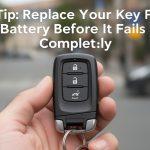
Few things are more confusing than a car key that works perfectly one day and suddenly refuses to cooperate the next. Perhaps the remote won’t unlock the doors, the vehicle won’t recognize the key, or you have to press the buttons repeatedly before anything happens.
Intermittent faults shouldn’t be ignored. They can indicate something as straightforward as a weakening battery or a more complicated problem with the key’s electronics or the vehicle itself. If the problem persists, professional Car key replacement Andover services can help diagnose the issue and determine whether your existing key can be repaired or whether replacement is the better option.
📑 Table of Contents
📍 Why Does a Car Key Work Intermittently?
📍 Check the Key Fob Battery First
📍 Inspect the Key for Physical Damage
📍 Could It Be a Programming or Electronic Issue?
📍 Try Your Spare Key
📍 When Might You Need a Replacement?
📍 When to Contact an Auto Locksmith
🔍 Why Does a Car Key Work Intermittently?
Modern car keys can contain several components, so an intermittent problem can have more than one possible cause.
Depending on the type of key and vehicle, common possibilities include:
🔋 A weak key fob battery
🔘 Worn or damaged buttons
💧 Moisture inside the key casing
💥 Damage caused by dropping the key
📡 Problems with the key’s electronics
🚗 An issue involving the vehicle rather than the key itself
The pattern of the fault can provide useful clues, but proper diagnosis is important before assuming the entire key needs replacing.
📸 Image: Driver Experiencing an Intermittent Key Fob Problem
A realistic image of a driver standing beside a modern vehicle and pressing an unresponsive remote key fob, with a slightly concerned expression. Professional automotive photography with subtle deep-red and black accents reflecting Demob Locksmiths branding.
🔋 Check the Key Fob Battery First
If the remote functions work sometimes but not others, the battery is an obvious place to start.
A weakening battery may cause:
📉 Reduced operating range
🔘 Multiple button presses before the vehicle responds
⏱️ Delayed locking or unlocking
🔄 Intermittent remote operation
If you’re comfortable replacing the battery, make sure you use the correct battery type and fit it in the correct orientation.
If a fresh battery immediately restores reliable operation, you may have found the problem.
📊 Intermittent Car Key Troubleshooting Guide
CAR KEY WORKING INTERMITTENTLY?
│
▼
🔋 Check the battery
│
▼
🔍 Inspect for damage
│
▼
🔑 Test the spare key
│
┌────┴────┐
▼ ▼
Spare works Spare also fails
│ │
▼ ▼
Key may need Vehicle-side issue
attention may need diagnosis
│ │
└────┬────┘
▼
🛠️ Professional assessment
🔑 Inspect the Key for Physical Damage
Take a close look at the key itself.
Even relatively minor damage can eventually affect reliability.
🧱 Cracked casing — A damaged shell may expose sensitive internal components.
🔘 Worn buttons — Frequently used buttons can deteriorate over time.
💧 Moisture exposure — Electronics and water aren’t a good combination.
💥 Impact damage — Repeatedly dropping a key can potentially damage components inside it.
🔑 Worn blade — Physical keys can gradually wear through years of use.
If the casing is coming apart or the key is visibly damaged, avoid forcing it into a lock or ignition.
📸 Image: Inspecting a Damaged Car Key
A detailed close-up of a modern vehicle key showing a worn button and slightly cracked outer casing beside an undamaged replacement key, clearly illustrating the physical warning signs motorists should look for.
📡 Could It Be a Programming or Electronic Issue?
A modern vehicle key may do considerably more than mechanically turn a lock.
Many keys incorporate electronic components associated with remote locking and vehicle security systems. If those components develop a fault, the symptoms can sometimes appear intermittent.
For example, you might notice:
⚠️ The doors unlock remotely but the vehicle doesn’t start as expected.
📡 Remote functions become unpredictable.
🚘 The vehicle occasionally fails to recognise the key.
🔄 The problem continues even after replacing the battery.
These symptoms don’t automatically mean the key needs replacing. Professional diagnostic checks can help determine whether the problem originates with the key or elsewhere in the vehicle.
🔑 Try Your Spare Key
If you have a spare, it can be extremely useful for narrowing down the problem.
If the spare works consistently while your everyday key doesn’t, that suggests the primary key deserves closer attention.
If both keys develop the same problem, however, the cause may not be either key.
That distinction can save unnecessary expense by preventing you from replacing a perfectly serviceable key when another issue needs investigating.
📸 Image: Comparing a Main and Spare Car Key
Two compatible vehicle keys positioned side by side beside a modern car, with one labelled visually as the everyday key and the other as the spare. The image should communicate straightforward comparison and troubleshooting.
🛠️ When Might You Need a Replacement?
Not every unreliable key requires replacement.
Some problems may be resolved through a battery change, repair, or other professional attention. Replacement becomes more likely when the key has suffered significant physical or electronic damage or cannot be restored to reliable operation.
Signs that warrant professional assessment include:
🚨 The key frequently stops responding
💧 The fob has suffered significant water damage
💥 The casing or internal components are badly damaged
🔑 The blade is heavily worn, bent, or damaged
📡 The electronic functions remain unreliable after basic checks
If you have only one working key remaining, dealing with the problem promptly is especially sensible.
📉 Repair, Diagnose or Replace?
SYMPTOM NEXT STEP
Weak remote range → 🔋 Check battery
Worn outer casing → 🔧 Assess for repair
Intermittent operation → 🔍 Diagnose fault
Spare works normally → 🔑 Check main key
Both keys show same issue → 🚗 Check vehicle
Severely damaged key → 🛠️ Assess replacement
🚫 Don’t Keep Ignoring an Intermittent Fault
A key that works nine times out of ten may not seem urgent—until the tenth attempt happens when you’re miles from home.
Repeated problems are worth investigating because intermittent faults can become permanent failures.
Avoid:
🚫 Repeatedly forcing a stiff key
🚫 Hitting or bending the fob to make it work
🚫 Continuing to use a badly cracked key casing
🚫 Assuming every problem is simply a flat battery
🚫 Waiting until your final working key completely fails
Early attention gives you more options and reduces the likelihood of an inconvenient lockout.
🎥 Video Suggestion: Why Does My Car Key Only Work Sometimes?
A concise educational video showing a driver troubleshooting an intermittent car key problem by checking the battery, inspecting the casing, testing a spare key, and seeking professional diagnosis when the basic checks don’t resolve the fault.
🚐 When to Contact an Auto Locksmith
If simple checks don’t solve the problem, an experienced auto locksmith can assess the key and advise on an appropriate solution.
Depending on the vehicle and fault, assistance may include:
🔍 Key and remote diagnostics
🔋 Key fob battery checks
🔑 Replacement key cutting
📡 Compatible key programming
🛠️ Repairs to certain key components
🚗 Mobile assistance at your location
A proper diagnosis can establish whether you actually need another key or whether the existing one can still be restored.
💡 Don’t Forget Your Spare
Once the immediate problem is fixed, check your backup key too.
A spare that’s been sitting untouched in a drawer for years shouldn’t automatically be assumed to work perfectly. Test it periodically and keep it stored securely in a dry location.
If you currently have only one functioning key, consider arranging a spare before that key develops a problem. Preparing in advance is far easier than discovering you have no working keys when you need the vehicle.
✅ Final Thoughts
If your car key works one day but not the next, don’t immediately assume you need an entirely new key. Start with the basics: check the battery, inspect the key for damage, and test your spare if you have one.
If the problem continues, professional diagnosis is the safest next step. Intermittent operation can be an early warning that something is deteriorating, and addressing it now could prevent a frustrating lockout later.
A car key should work reliably every time—not just when it feels like it.